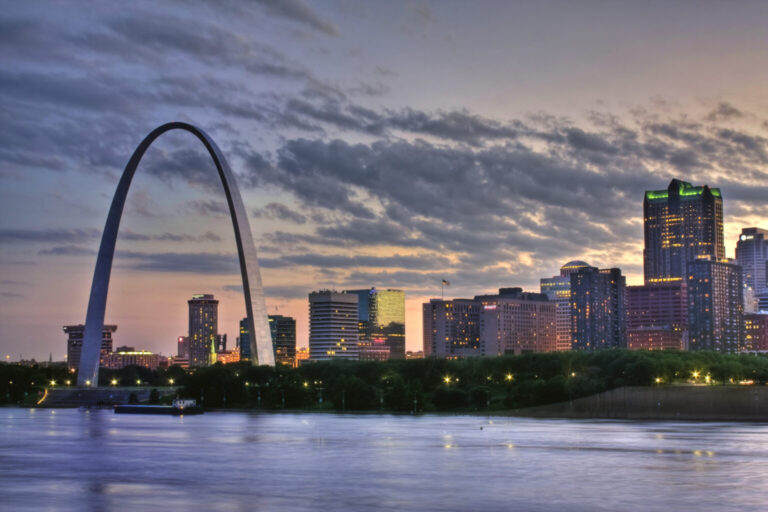
New support for WashU startups, St. Louis region
A new funding program for Washington University in St. Louis-affiliated startups focuses on strengthening the St. Louis region. The WashU Venture Network Follow-on Investments is a joint effort between WashU’s Skandalaris Center for Interdisciplinary Innovation and Entrepreneurship and the “In St. Louis, For St. Louis” initiative. It will award up to $150,000 each year to companies with WashU ties that previously have been awarded funding through Arch Grants, the local nonprofit that awards equity-free grants to startups. The goal is to support startups with a high probability of remaining in St. Louis after the grant period is complete.
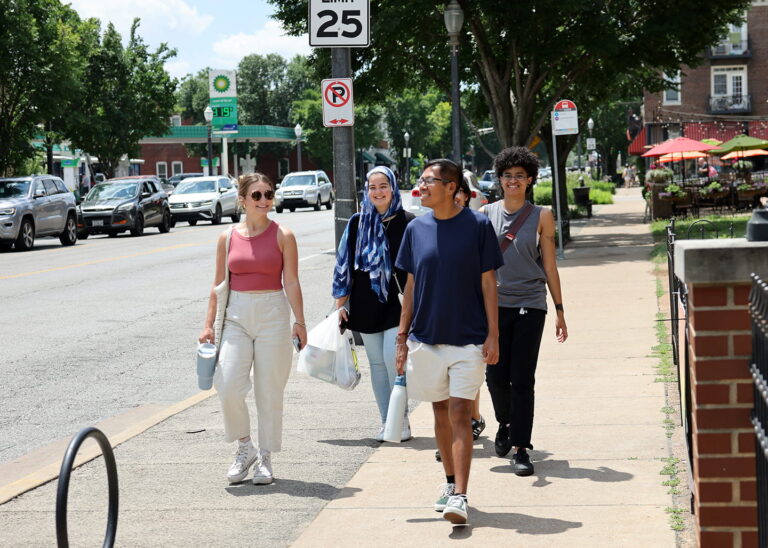
Neighborhood immersions and retreat bond Fellows with St. Louis, each other
When a WashU student becomes a St. Louis Fellow, they make a commitment to serve St. Louis effectively and responsibly, immersing themselves in the community and finding ways to contribute to positive progress in the region. As part of this commitment, St. Louis Fellows participate in Engage STL Days, during which they visit local neighborhoods and engage with community members.

At Cortex, Taylor works at the intersection of economics and inclusion
As part of the St. Louis Fellows Program, Harlem Taylor ‘27 and Daniel Niu ’26 worked at Cortex Innnovation Community this summer, supporting the organization’s mission to “accelerate inclusive economic growth in St. Louis.”
Olin StartUp Grants to award $50,000 to WashU, St. Louis-based startups
WashU Olin Business School’s entrepreneurship program will award two $25,000 grants in December to WashU-founded or St. Louis-based startups.
Washington University researchers studying urban heat islands and their impacts on public health
The City of St. Louis is prone to an urban heat island effect, a phenomenon caused by dense areas of pavement, flat roofs, brick buildings and other surfaces that absorb heat from the sun, radiating it back into the surrounding air. Research published by Climate Central shows that some urban areas see temperatures as much as 10 degrees hotter than rural areas that enjoy more widespread vegetation and shade. In St. Louis, the Midwest Climate Collaborative at Washington University works to study heat islands and their effects on quality of life in the region. The university’s Tyson Research Center has been actively gathering data and studying the impacts of heat islands, too.
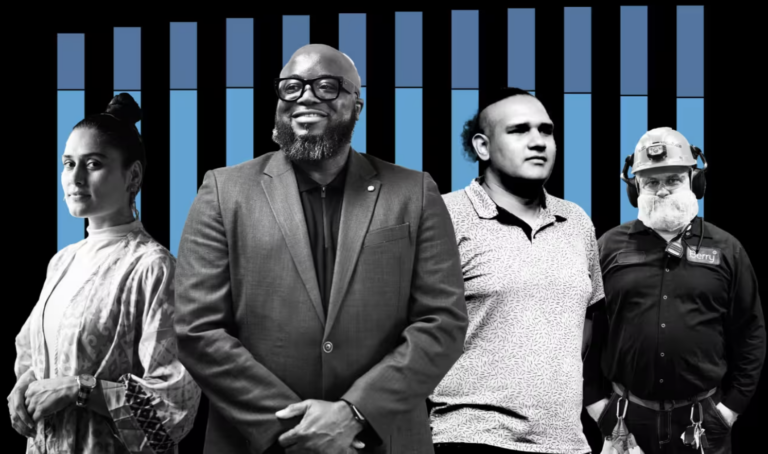
Financial Times: St. Louis ‘stands out’ in efforts to grow foreign-born population
The Financial Times recently showcased the International Institute of St. Louis’s efforts to grow the St. Louis metro population by recruiting immigrants and refugees to live and work in the area. The Financial Times article also said the St. Louis metro area “stands out in both its method and ambition” to increase foreign-born communities and in how nonprofit, governmental, and business communities have come together to support the effort.
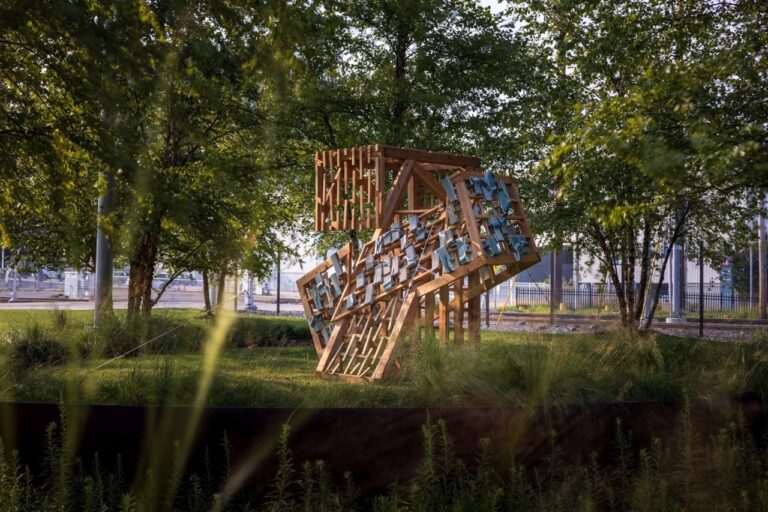
Fields + Frames
In the spring 2024 semester, students in Assistant Professor Kelley Van Dyck Murphy’s Fields + Frames course created temporary public art installations in St. Louis’ Cortex Innovation District. The course was funded by a grant from the Office for Socially Engaged Practice and a teaching grant from the Sam Fox School.
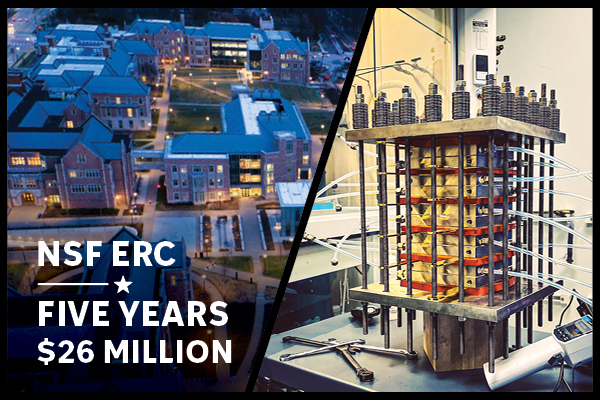
Washington University researchers leading NSF-funded biomanufacturing project
The National Science Foundation has awarded a team led by Washington University researchers a $26 million, five-year grant to investigate ways to use existing carbon dioxide for manufacturing through biological systems. WashU’s McKelvey School of Engineering is leading the project, called the Carbon Utilization Redesign for Biomanufacturing-Empowered Decarbonization (CURB) Engineering Research Center. Marcus Foston, co-principal investigator and […]
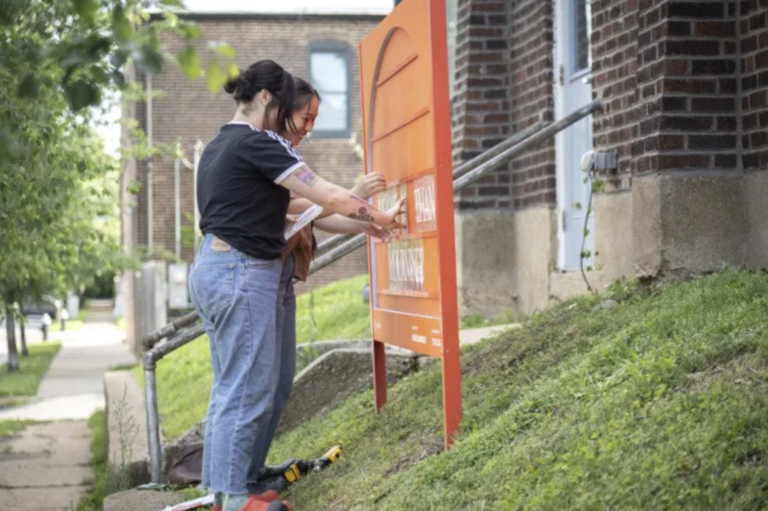
Words on the Street
WashU alums Shannon Levin and Marina Peng understand that the very nature of public art makes it difficult to gauge how it resonates with the people viewing it. Yet if they ever doubt that their public art project, PSA, strikes a chord with St. Louis audiences, they can recall a recent story about what happened when two passers-by encountered one of their installations.
WashU to lead $26 million decarbonization initiative
To minimize the impact of man-made climate change, it is essential to significantly and rapidly decrease carbon dioxide emissions while simultaneously meeting the energy and manufacturing needs of a healthy and economically stable society. A powerhouse collaboration of universities and industry, led by the McKelvey School of Engineering at Washington University in St. Louis, is embarking on a bold plan to transform manufacturing toward zero or negative emissions by converting carbon dioxide ultimately into environmentally friendly chemicals and products that create a circular economy.