Resilient Cities
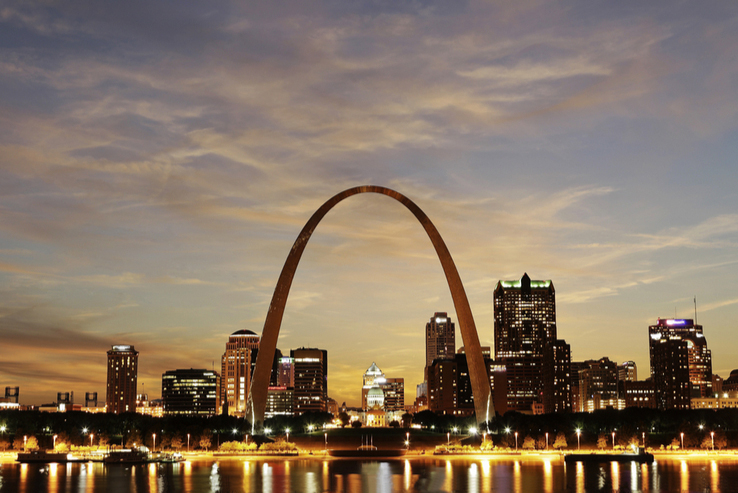
The Resilient Cities initiative from Sam Fox School engages the St. Louis community regarding complex issues of environmental and social resiliency. Current projects focus on the establishment of Peace Park in the College Hill neighborhood and engagement with the Great Rivers Greenway (GRG) Brickline Greenway Project.
Shaw Institute for Field Training (SIFT)
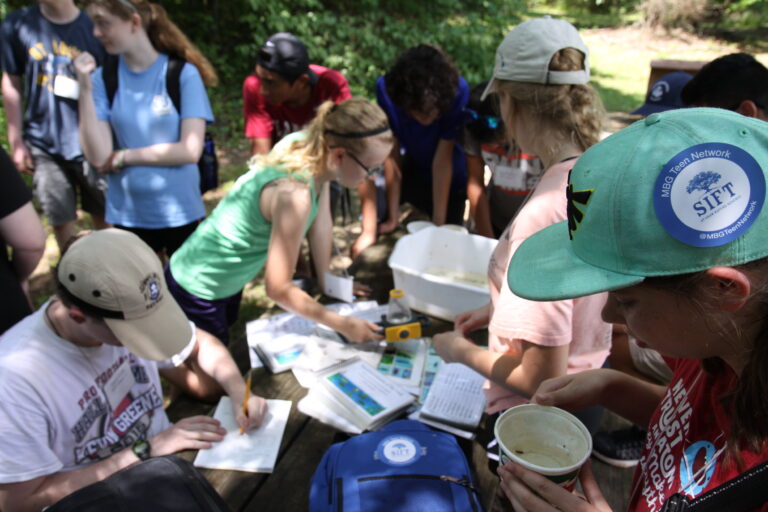
The Shaw Institute for Field Training (SIFT) program is an introductory training program designed to engage St. Louis 10th-12th graders in scientific exploration of the natural world, in collaboration with Shaw Nature Reserve. The program provides virtual and in-person training. Students are able paid and given transportation to these sites. Opportunities include species management, habitat restoration, and plant and animal inventories.
Midwest Climate Collaborative
The Midwest Climate Collaborative (MCC) is a cross-sector network with a vision of a carbon neutral, climate resilient, interconnected Midwest region. It amplifies climate successes, connects organizations across sectors and communities, and builds capacity for collective action on climate. The MCC does this by sharing knowledge, supporting climate research, and pursuing federal and private funds.

Interdisciplinary Environmental Clinic
The Interdisciplinary Environmental Clinic (IEC) at WashULaw handles environmental and community health cases. All cases are pro bono and are mostly concentrated to Missouri and Illinois with some being on the national level. Unlike many other clinics, the IEC work as an interdisciplinary team including students from law, engineering, arts and sciences, public health, medicine, business, and architecture.
St. Louis Fellows Program
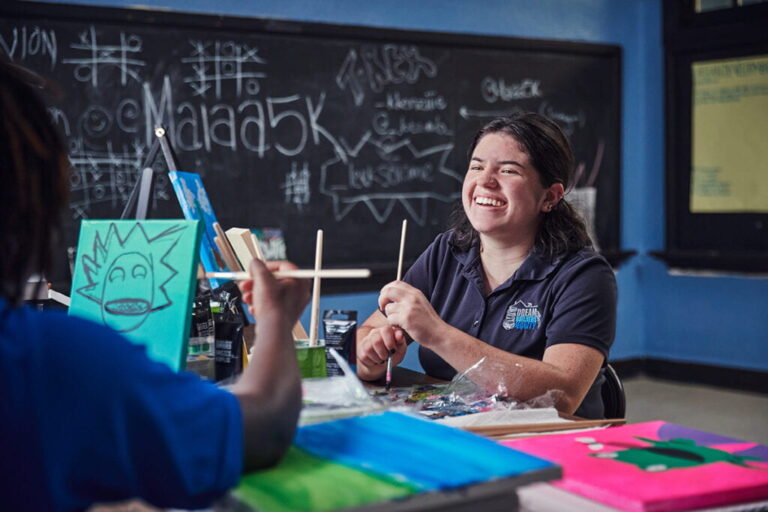
The St. Louis Fellows Program offers a 6-month civic leadership training to undergraduates who dedicate their summer to St. Louis. Students engage in an experiential curriculum to explore St. Louis’ history, culture, politics, challenges, and opportunities, and contribute to mission-critical work in the region through full-time nonprofit or civic internships.
Civic Fellows Program
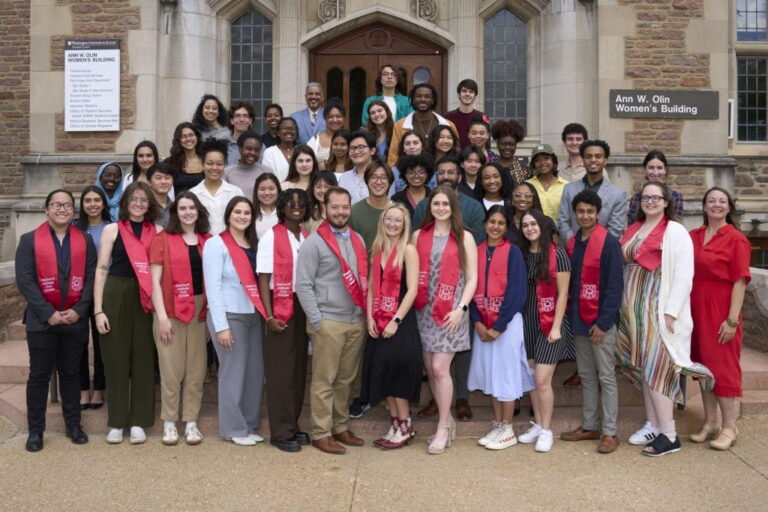
The Civic Fellows Program is a 14-month civic leadership training with academic coursework and experiential learning, open for first-year and sophomore students to apply and earn eight course credits. It includes immersive opportunities in St. Louis and Washington DC to engage with local neighborhoods, the policy-making process, and civic change efforts in the region and across the country. During the summer, students engage in a Civic Summer project through a nonprofit internship or self-designed civic impact project that often takes place in partnership with St. Louis civic and community organizations.
Alliance for Native Programs and Initiatives (ANPI)
This collaborative effort between the Brown School’s Buder Center with leaders at the St. Louis Zoo, St. Louis Art Museum, Missouri Humanities Council, Missouri History Museum and Lutheran Indian Ministries, is meant to advance Native partnerships and programming. Strengthening collaboration and communication will allow better dissemination of knowledge, stronger programs, and improved outreach.
Environmental Studies Impact Internship
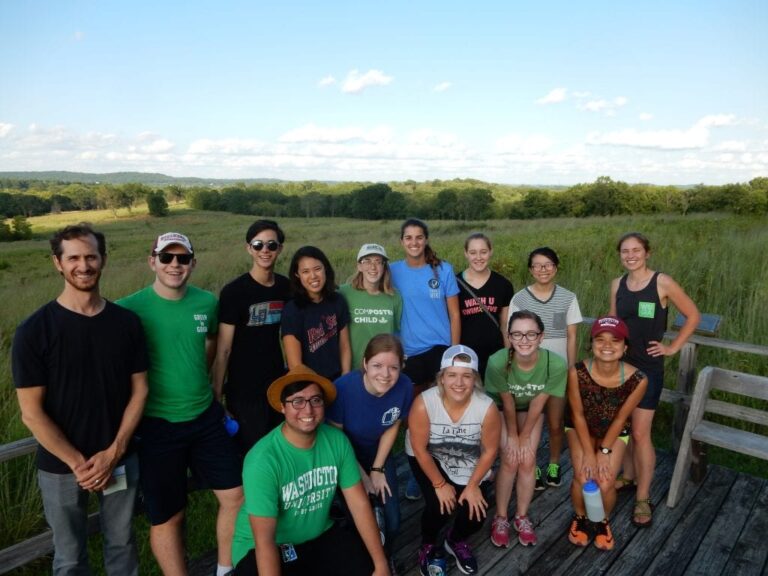
The environmental studies impact internship offers WashU students the opportunity to work with St. Louis organizations to positively improve and impact the quality of life through an environmental justice lens.
Living Earth Collaborative
In early 2018, the Living Earth Collaborative: Center for Biodiversity was launched. WashU partners with the Missouri Botanical Garden and the Saint Louis Zoo to advance the center’s mission. The mission includes advancing the knowledge of biodiversity and ensuring the future of the diverse species of earth. Students within the center can participate in research courses and internships that further accelerate the biodiversity work and the relation with these St. Louis areas.
The Sustainability Exchange Course
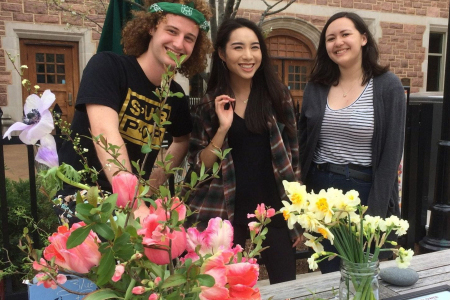
The Sustainability Exchange Course at WashU provides students and faculty with the opportunity to make an impact on sustainability projects in the St. Louis area. Project teams, which are made of a St. Louis client, a faculty advisor, and a group of students, all work toward a common goal. Since its creation in 2015, there have been 76 projects with over 350 students.